Nix-Based Developer Tooling Companies to Watch
Enterprise teams now see Nix's reproducibility as critical for security and compliance.
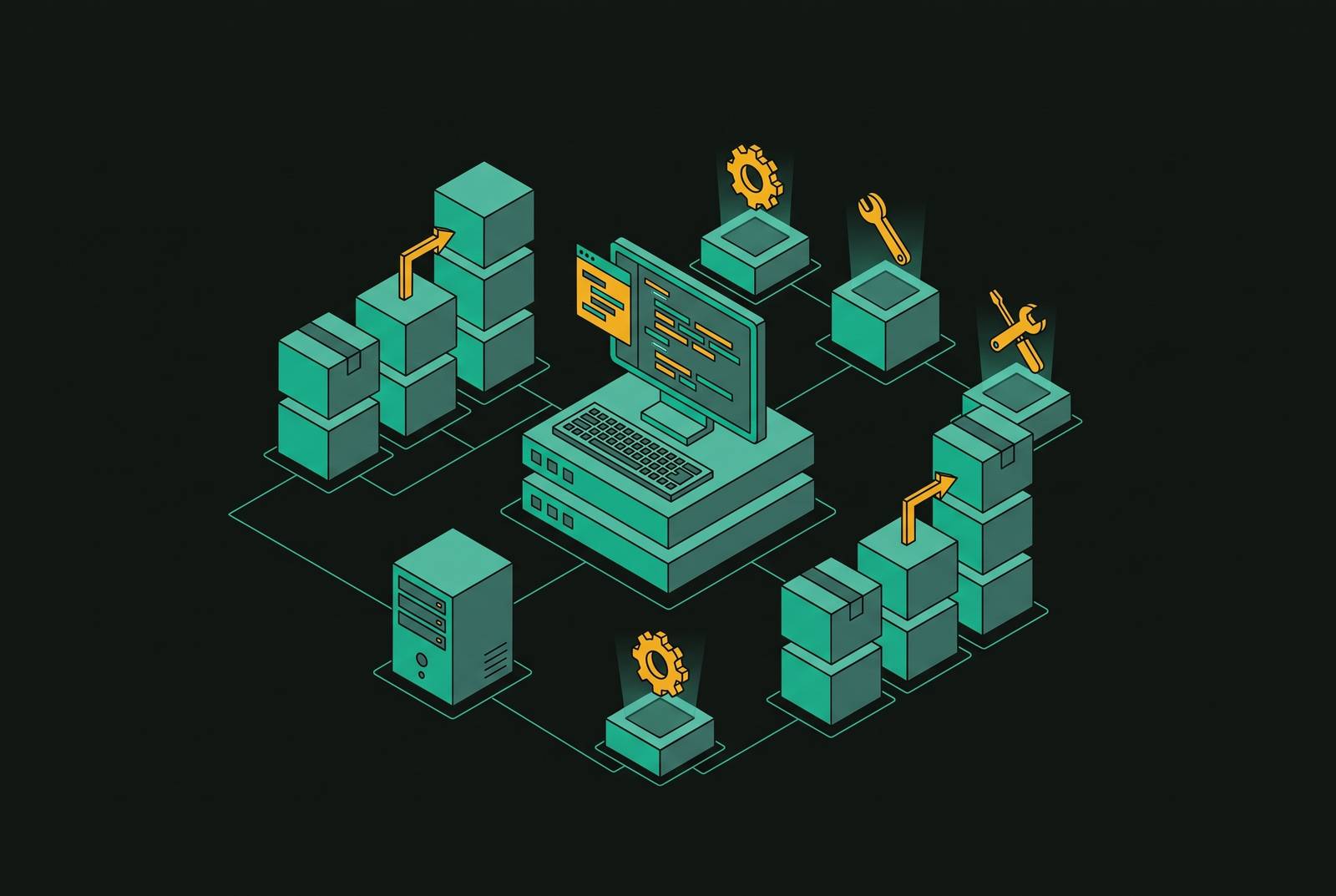
Three converging pressures have made Nix's deterministic model an enterprise priority rather than a Linux enthusiast preference: regulatory demand for software bills of materials and provenance post-XZ and Log4Shell, the explosion of AI coding agents that need stable and auditable tool environments, and the platform engineering movement's push to eliminate environment drift at scale. Each of these pressures lines up with something Nix already does by design. Hashes give auditors provenance, sandboxed builds block a class of supply chain attack, and bit-for-bit reproducibility removes the drift that platform teams spend their budgets fighting.
None of this is a new invention arriving to meet a new problem. The underlying technology has been running since Eelco Dolstra's 2003 research project at Utrecht University, with NixOS reaching its first stable release in 2013 and the surrounding ecosystem growing steadily since. What's changed is the size of the audience and the appetite of enterprise buyers, and that combination has made it viable for specialized companies to build businesses on top of Nix's open-source core.
What Nix does that traditional package managers do not
What separates Nix from a conventional package manager isn't a feature list, it's an architecture that makes certain failures structurally impossible rather than merely unlikely. A build cannot succeed if one of its dependencies has been silently altered, and a build environment cannot reach outside infrastructure while it's running.
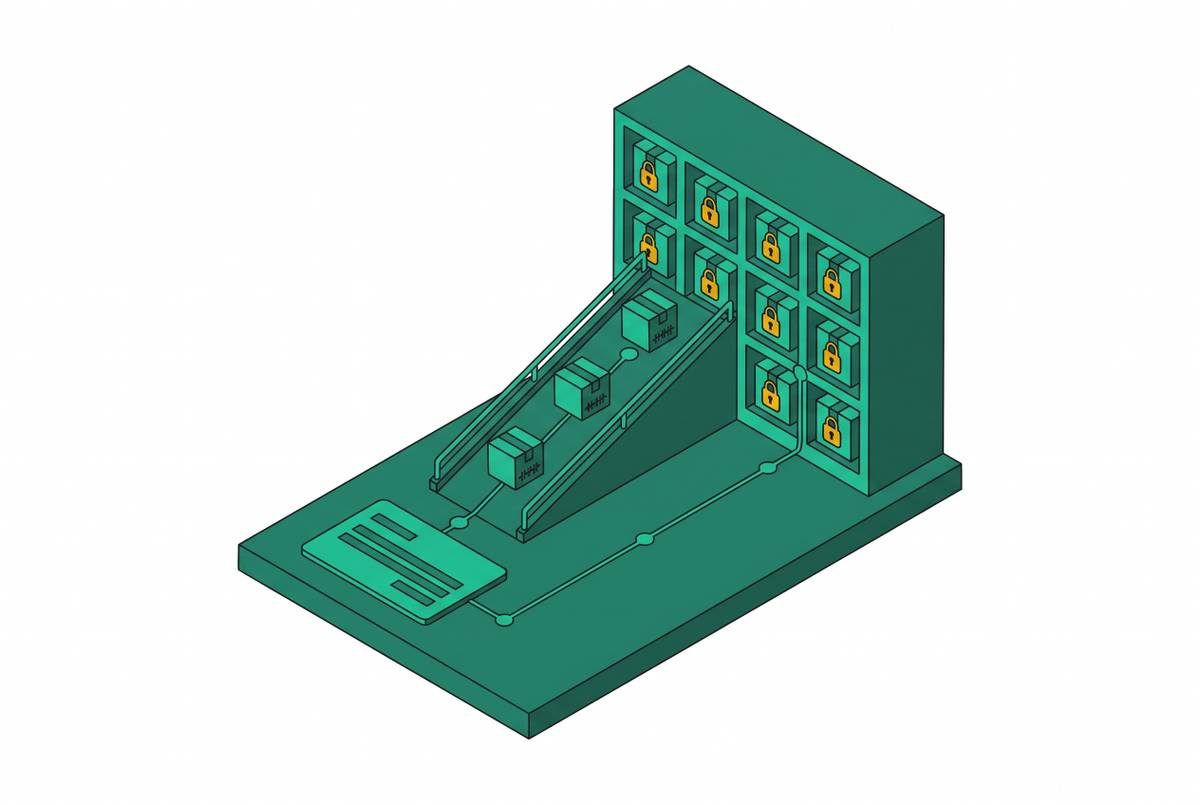
Every package is defined with a SHA-256 hash of all its inputs: source code, dependencies, compiler flags, and the build environment itself. If anything in that chain changes, whether from a compromised upstream repository, a maintainer's mistake, or a deliberate attack, the hash stops matching and the build fails outright instead of quietly shipping a tampered artifact. Builds also run inside a sandbox with no internet access, which closes off exfiltration during the build phase itself. That's not a hypothetical risk: when the Trivy open-source vulnerability scanner was compromised, the malicious code tried to reach external infrastructure from inside the build environment, and a Nix-style sandbox would have blocked that call before it ever left the machine.
The payoff is hermetic evaluation: the same inputs produce the same outputs whether the build runs on a developer's laptop, inside CI, or in production. That consistency is the precondition for any SBOM or deployment attestation a security team can actually trust, because an SBOM generated from a build that might behave differently elsewhere isn't worth much. NixOS extends this same logic to the operating system layer, generating full system profiles from declarative configuration and enabling reproducible deployments, atomic upgrades, and clean rollbacks. Those are exactly the properties the companies covered below are now packaging, in different forms, for enterprise teams that need more than a package manager's promise, they need a guarantee they can point to in an audit.
Determinate Systems: commercializing the Nix toolchain itself
Determinate Systems sits upstream of nearly everyone else in this landscape, because its business isn't a product built on Nix, it's Nix itself, hardened and certified for enterprise use. The company adds enterprise-grade reliability, a security certification, and a package registry directly onto the open-source toolchain rather than wrapping it in something new.
The backing and credentials matter to procurement teams specifically: a seed round from Root Ventures and SOC 2 Type II certification are the kind of signals that let a security review proceed without becoming a blocker. On the technical side, Determinate Nix extends the open-source package manager with lazy trees that cut evaluation time by roughly three times or more, parallel evaluation that cuts evaluation time by half or more, and stable flakes backed by a formal stability guarantee. Those three improvements go straight at the objections enterprise teams most commonly raise about Nix's maturity: that it's slow to evaluate, that its newer flake system is a moving target, and that nothing about it feels locked down enough to commit to in production.
FlakeHub, the company's platform for binary caching and private flakes, has received FedRAMP High authorization under FedRAMP's 2026 Consolidated Rules at Certification Class D, which lets federal agencies and their contractors pull reproducible, provenance-preserving Nix artifacts from inside the FedRAMP boundary. FlakeBOM generates SBOMs directly from Nix flakes and folds in Vulnerability Exploitability eXchange data for CVEs that have already been manually mitigated, merging a customer's own VEX metadata into the SBOM in a single step, so the SBOM becomes a byproduct of the build itself rather than a separate audit-time chore. Determinate Secure Packages, a curated Nixpkgs distribution, commits to patching critical CVEs within a seven-day SLA: Determinate patches the affected packages, rebuilds the full covered set, and pushes the results to FlakeHub Cache so customers pull pre-built artifacts instead of rebuilding locally.
Any cache-based distribution model introduces a dependency on that cache's own uptime. A team relying on FlakeHub Cache for pre-built, patched artifacts is relying, in part, on FlakeHub being reachable when it matters. That's a manageable tradeoff rather than a disqualifying one, and it's a real operational dependency rather than a purely theoretical one.
Jetify's Devbox: a Nix on-ramp that hides the learning curve
Jetify, formerly known as Jetpack.io, released Devbox in early 2023 on a specific bet: most developers will never learn Nix directly, so the commercial opportunity lies in delivering Nix's guarantees through a JSON config and a CLI that never asks the user to touch the underlying model. A developer lists tools and dependencies in a devbox.json file, runs devbox shell, and gets an isolated environment with exactly those versions, untouched by whatever else is installed on the machine or in other projects. The isolation underneath is real Nix isolation, and the developer just never has to know that.
That bet rests on a documented barrier. Nix's expression language reads as alien to developers used to imperative configuration files, and its documentation has historically been scattered across sources of varying quality, which is the single most cited reason teams stall out on adoption. Devbox treats that barrier as a product problem to be engineered away rather than a cost the user has to absorb through more training or more patience.
The tradeoff appears at the edges of complexity. Teams building multi-service environments, or ones that need to reach into Nix's derivation model directly, will eventually run past what a JSON abstraction can express, and at that point a thinner abstraction or a fuller platform fits their needs better. This is a consequence of the tradeoff Devbox made deliberately: trade some ceiling on expressiveness for a much lower floor on adoption cost. Teams should weigh that tradeoff against their own roadmap rather than treat either side as the default answer.
devenv occupies the middle ground in this landscape: a high-level abstraction over Nix shells that keeps more of Nix's composability than Devbox while still keeping developers away from the expression language's rough edges. It's a different bet than Devbox's. Rather than hiding Nix entirely, devenv exposes enough of it that advanced users can still compose complex environments, while newcomers get a simpler surface to start from.
Version 2.0, shipped March 5, 2026 according to the research brief, brought re-run performance down from seconds to milliseconds, with environments activating in under 100 milliseconds. That speed is what makes it realistic to activate an environment every time a shell opens rather than treating environment setup as a deliberate, occasional step.
The more consequential change in 2.0 is the built-in MCP server and Claude Code integration, turned on with claude.code.enable = true in devenv.nix, alongside a devenv generate command that builds environments from natural-language prompts. That turns the environment definition itself into something an AI agent can write and check, not just something it consumes passively. The open-source model behind all of this means no per-seat pricing and no lock-in on the environment manifest, a real advantage for teams that want to own their definitions outright. Open-source projects don't carry the predictable maintenance velocity of a funded commercial product, and enterprise support, formal SLAs, and compliance certifications all require additional layers that a volunteer-maintained project doesn't automatically provide.
Why AI coding agents need hermetic environments
The MCP integration in devenv points at something larger than a feature: AI coding agents need hermetic environments for reasons that go beyond what human developers need, because the failure modes are structurally different. An agent that installs and invokes tools on its own produces results that are easier to audit and reproduce only when the environment it runs in is pinned and defined ahead of time, and Nix's model fits that requirement better than pip or npm specifically because the environment can't drift between one agent invocation and the next.
Who notices when something breaks separates human developers from autonomous agents. A human developer notices a tool behaving oddly and traces it back to a version change. An autonomous agent has no equivalent instinct: it will keep producing different outputs under different environment states without flagging anything, and debugging that after the fact is close to impossible unless the environment was pinned and reproducible from the start.
The MCP server pattern, implemented in devenv 2.0 and described elsewhere in the research for comparable tools, lets an agent search millions of historical package-version combinations, pick a specific version, install it, and then hand the whole environment definition off to CI or production unchanged. Because the manifest captures everything the agent did, the work is reproducible automatically rather than reproducible only if someone remembers to document it. Coding assistants including Claude Code, Codex, Gemini CLI, and Copilot CLI can all integrate with MCP servers that expose Nix package search and installation, so the reproducibility guarantee reaches into the agentic loop itself and isn't limited to the human-authored setup phase that came before it.
There's a supply chain argument buried in this too, and it's a serious one. An agent that can pull arbitrary packages off the internet without any hash verification is an uncontrolled entry point into the supply chain, full stop. Nix's requirement that every package be hash-verified at definition time closes that entry point even when the thing doing the installing is an autonomous agent rather than a person at a keyboard.
Serokell: production Nix for regulated and financial industries
Not every company in this space sells software. Serokell, a European consulting and tooling firm, represents a different category of Nix commercialization built on implementation expertise rather than a SaaS product, aimed at organizations where a failed build or a compromised dependency has regulatory consequences.
The firm's work centers on production Nix deployments for regulated and financial clients, and it contributes back to open-source Nix infrastructure, which puts it on both the commercial and community sides of the ecosystem at once. That dual role matters in industries where SOC 2, FedRAMP, or financial regulation demands demonstrable build provenance and reproducibility, because there's a real gap between a technology being technically capable of meeting those demands and an organization actually having it deployed, audited, and signed off on by compliance. Serokell's value sits inside that gap, closing it through implementation work rather than through a product a team can simply install.
Manifest Cyber: SBOM security as a complement to the Nix build layer
Manifest Cyber operates one layer further downstream, on the artifacts Nix produces rather than on Nix itself. Because Nix environments are fully enumerable and every package in them is hash-pinned, automated vulnerability mapping against those environments can be precise and complete in a way that's structurally out of reach for conventional dependency managers.
The Manifest Platform has added automated vulnerability mapping for Nix packages, letting security teams track known vulnerabilities across Nix-based environments and catch cases where a vulnerability is hiding inside an otherwise reproducible build pipeline. Reproducibility is not the same thing as security, and a deterministic environment will happily pin a known-vulnerable package in place forever if nothing checks for it. An SBOM only has value if something acts on what it reveals, and that's the gap Manifest Cyber's vulnerability mapping closes.
Put together, Nix-generated SBOMs from tools like FlakeBOM and automated CVE mapping against those SBOMs complete the supply chain security argument in a way neither piece manages alone: provenance without vulnerability tracking is audit theater, and vulnerability tracking without provenance is guesswork. That two specialized layers have emerged on top of the Nix foundation, one generating proof of what's in a build and one checking that proof against known risks, is itself a sign the ecosystem has matured past a single-vendor story.
Enterprise Onboarding and Environment Drift
Every company covered here agrees on the diagnosis: environment drift is a real security and reliability risk, and Nix's cryptographic model is the right foundation to build on. Where they disagree is on where exactly the abstraction layer should sit, and that disagreement is what determines which teams end up as their customers.
Determinate Systems locates the problem at the Nix runtime layer itself, on the theory that enterprises need a certified, stable, supported distribution of Nix before they can safely build anything on top of it. Its product is an enhanced Nix distribution bundled with SOC 2 certification, a package registry, and SBOM generation as infrastructure. Devbox locates the problem one layer up, at the developer interface, on the theory that most developers won't adopt Nix directly no matter how good the underlying toolchain gets. Its product is a JSON-based abstraction that delivers Nix's benefits without requiring any Nix knowledge at all. devenv splits the difference, giving developers more of Nix's native composability than Devbox exposes while still shielding them from the expression language, and backing that choice with an open-source model instead of a funded commercial one.
A team evaluating this landscape is really choosing where it wants to absorb complexity: at the runtime layer, at the developer interface, or somewhere in between, with open-source flexibility traded against commercial support guarantees. Tools like Flox take their own position in that same landscape, embedding Nix's reproducibility and cryptographic pinning into a declarative manifest that teams version, share, and promote across dev, CI, and production, which is the prerequisite for any trustworthy SBOM or deployment attestation. None of these bets is wrong. They're answers to different questions about where, in an organization, Nix's guarantees need to become someone else's problem to maintain.