Lockfile Strategies for MCP Server Python Environments Across Agent Runtimes
Dual lockfiles ensure MCP servers run with identical dependencies and capabilities across machines.
Ravi Petrova
Section
17 stories in AI Agent Development Environments.
Dual lockfiles ensure MCP servers run with identical dependencies and capabilities across machines.
Making AI agent output reproducible across environments requires pinning the entire toolchain.
AI-generated code pulls in dependencies faster than humans can audit them.
Environment consistency compounds failures faster than orchestration design can fix them.
Four independent version numbers in MCP servers create silent failures when they drift apart.
Benchmark scores hide whether frameworks work the same way across machines and CI pipelines.
Lock files solve GPU dependency hell, but only if you stop treating CUDA as optional infrastructure.
Stabilize environments first, then measure what your AI agent actually does.
Treat agent runtimes with the reproducibility discipline applied to production code.
AI-generated code suggests packages that often don't exist, opening a supply chain attack vector.
Agent failures usually stem from missing tools, not broken reasoning.
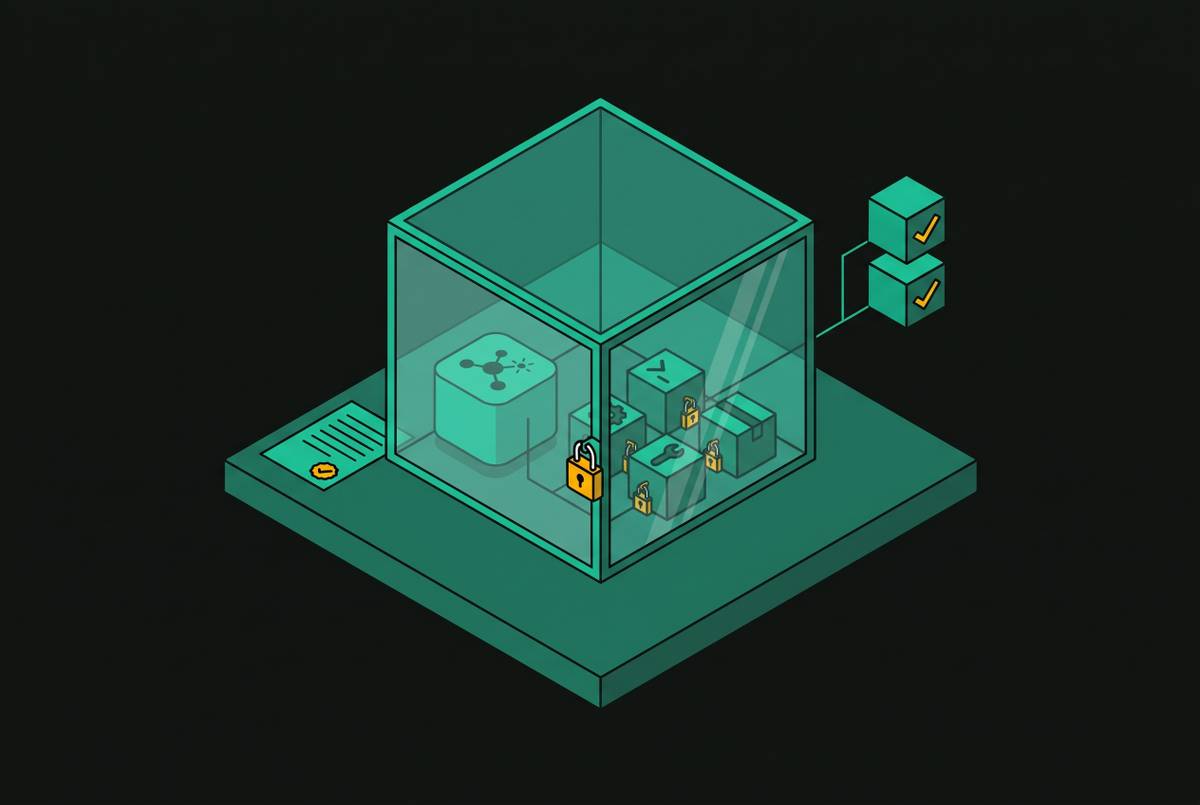
Containers alone won't protect against AI-generated code escaping to the host.
Declarative controls layered over containers stop agents from abusing filesystems and networks.
How six distribution paths create reproducibility gaps in MCP server deployments.
Only 68% of agent-generated code runs in clean environments without modification.
Environment drift and supply chain attacks create silent failures that put AI agents at risk.
LLMs lose control over tool execution when untrusted data flows through autonomous agent pipelines.