Zero-Nix-Syntax Onramps That Still Lock Packages to a Nix Store Hash
Nix package abstractions can skip the language while keeping immutable store hashes.
Nix-powered developer environments without writing Nix are possible with Flox’s plain configuration manifests and JSON-based package-manager wrappers. The decisive test is whether the abstraction preserves pinned Nix store identities from local development through CI and deployment. Project-centric Nix configuration and automatically activated flakes offer other onramps that simplify working with Nix while retaining its language.
How the Nix store's input hash makes packages immutable — and why that matters before picking a tool
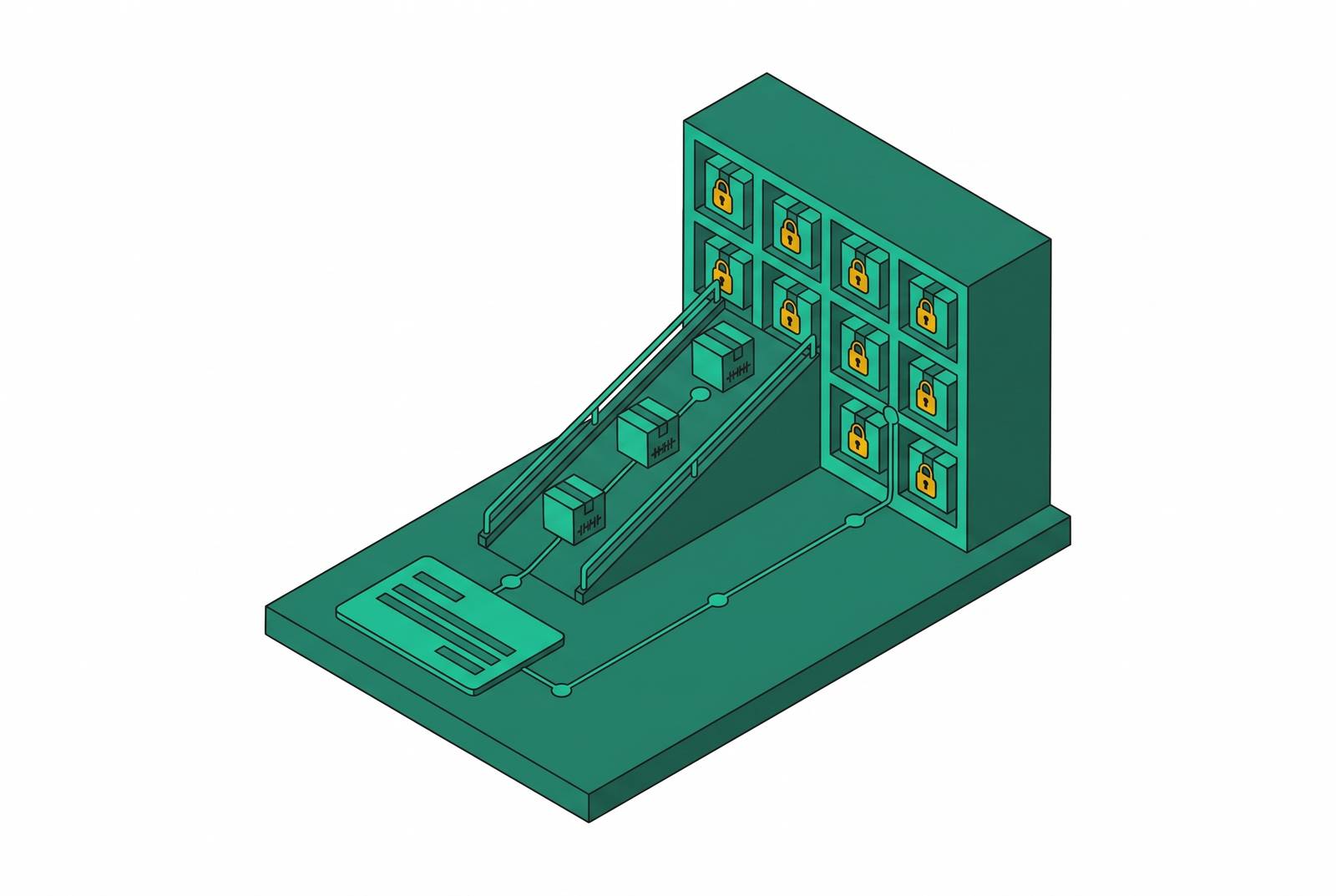
A Nix package has a path like /nix/store/<hash>-name-version. Nix’s store concept documentation explains that the hash derives from the inputs to the derivation, which is the recipe describing the source, patches, dependencies, and build script. Changing an input changes the store path, even if the package name and version stay the same. The name is not the package’s identity. The input-derived hash distinguishes one build recipe from another.
Once built, packages in the store are read-only. That prevents a package from drifting in place, which is a different guarantee from recording an intended version in an npm or pip lock file. A version string identifies a release, but it does not by itself establish the complete set of inputs used to build it. The store path binds the package to those inputs. This is input-addressed identity, so the hash differs from a checksum made from just the finished package’s bytes.
Why the Nix expression language is the main barrier between developers and this guarantee
Nix has a purely functional expression language, derivations, and a mental model that differs from familiar setup scripts. Its documentation also assumes familiarity with functional programming. The cost is a new authoring discipline. Engineers who only need a shared toolchain must otherwise learn how to describe its construction before they can benefit from its immutable storage.
Flakes organize dependencies around a lock file, but they do not remove that authoring requirement. A flake.lock pins dependencies to exact Git commits, while a flake.nix still expresses the environment in Nix. Raw nix-shell and nix develop remain low-level entry points rather than substitutes for understanding the underlying configuration. This separates the guarantee from its interface. Because store identity comes from the build mechanism, an abstraction can preserve it without asking every developer to write the language that drives it.
Four abstraction layers that deliver hash-locked packages without Nix syntax, and how they differ
The plain-TOML manifest approach makes the environment, rather than a container image, the unit of promotion. Its manifest.toml lists packages, variables, and hooks without Nix expressions, while manifest.lock pins the resolved store paths and env.json holds metadata. The manifest is therefore not the entire lock. With atomic edits, pinned references, and instant rollbacks, a manifest update can take the place of the traditional build-scan-tag-push cycle.
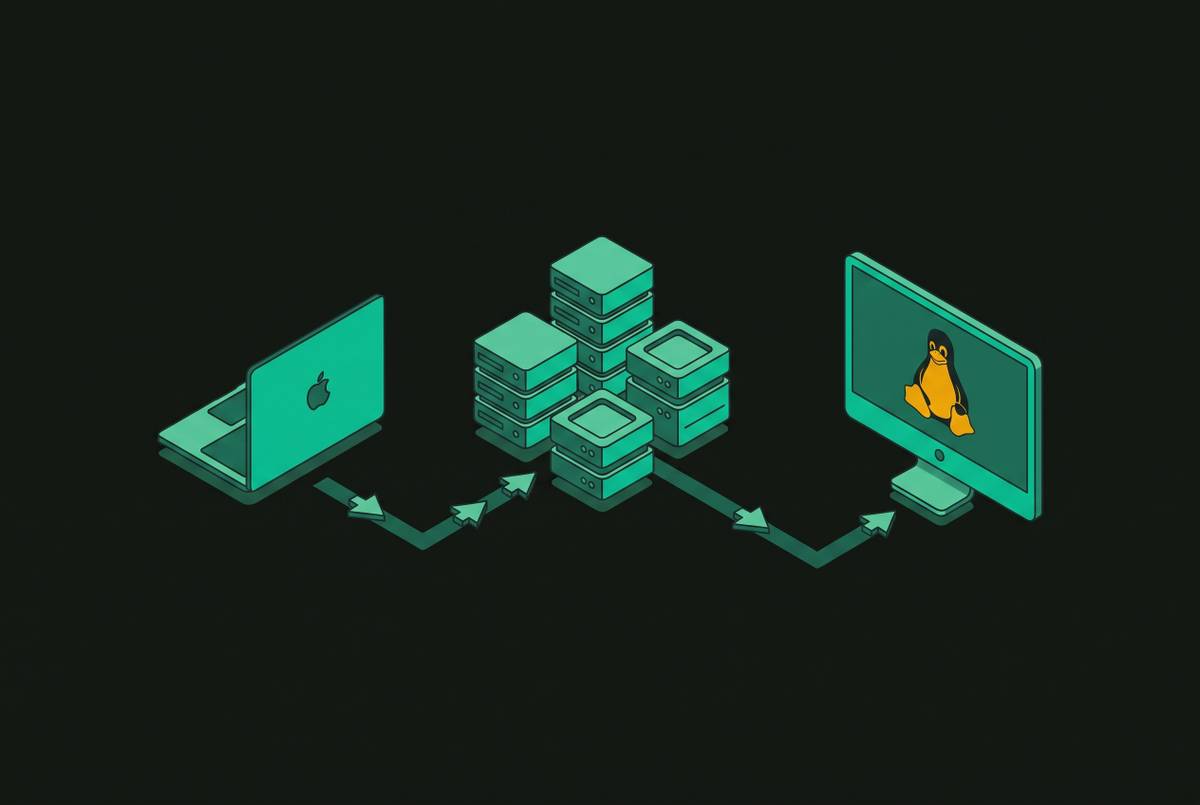
With the hosted registry, teams can share these environments, version them, and get them by name. Complete stacks can be pulled on demand, and deterministic SBOMs expose their supply chain. These environments run natively on Linux and macOS, x86-64 and ARM, CPU and GPU, without container isolation separating developers from their local tools and dotfiles. Containers remain an optional output: the same approach can emit minimal OCI images when an existing workflow requires them.
A project-centric Nix configuration layer takes a smaller step away from the underlying language. Its central file is devenv.nix, with a companion lock file that pins dependencies and an OCI container command for container workflows. The configuration remains Nix rather than an ordinary configuration format such as JSON. That distinction defines who it serves best. It is an ergonomic route for teams prepared to work with Nix syntax.
A JSON package-manager wrapper places familiar commands in front of the store mechanism. Its devbox.json describes packages, a command such as devbox add nodejs@20 adds them, and devbox.lock pins each package to a specific Nixpkgs commit. Teams can choose their usual packages without writing in the Nix expression language. Custom derivations change that boundary, however, because packages outside the available Nixpkgs definitions require stepping into Nix.
Automatic shell activation over raw flakes is the thinnest layer. With direnv, entering a directory activates the environment defined by flake.nix and flake.lock, removing the manual nix develop step. The developer still writes the flake in Nix. Of these four approaches, the manifest and JSON routes remove Nix syntax from ordinary environment authoring, while the other two mainly reduce the effort of using it.
What a good abstraction must preserve: the hash guarantee must survive the simplification
The diagnostic test starts with what the lock actually records. A resolved store path, or a pinned Nixpkgs commit together with the environment’s other declared inputs, establishes more than a version string that can resolve differently across machines. For a team evaluating an abstraction, the question is whether local development, CI, and deployment consume that binding or independently resolve their own packages.
An ARM macOS environment and an x86-64 Linux environment should each get native binaries, so their store paths can differ. The shared guarantee is the pinned definition evaluated for the relevant architecture. Different paths can therefore be correct. Likewise, local and CI environments preserve parity when they evaluate the same pinned derivation, rather than separately interpreting a list of preferred versions.
Deployment is the final test of that continuity. In the manifest-based approach, the input-derived environment hash can attach to deployments and become the identity used for CVE discovery, blocking, or patching. That supports queries against the hash instead of searches through logs to reconstruct what ran. The identity survives beyond the developer’s shell. In this deployment model, the mechanism replaces image-based promotion rather than simply rescanning images under a different name.
How hash-locked environments make SBOM generation a byproduct of the build, not a post-hoc scan
A derivation records the dependencies used to build a package, so the dependency graph is there before a scanner looks at the finished artifact. An SBOM can be materialized from that graph. The hash identifies the recipe and its inputs. Its connection to the derivation gives inventory generation an explicit basis, although the hash itself is not a readable inventory.
sbomnix generates SBOMs from a Nix flake reference or store path. Its companion provenance tool accepts flake references and derivations and produces SLSA v1.0 compliant provenance attestations in JSON format. The configuration-manifest approach also generates deterministic SBOMs from environment definitions without requiring their owners to learn Nix. The abstraction hides the expression language but keeps the dependency information open to audit.
The EU Cyber Resilience Act mandates machine-readable SBOMs for products with digital elements starting December 2027. This rule gives companies selling into the EU market a reason to put that distinction to work now. Inventory needs a durable connection to the product. A store-graph-derived SBOM provides that connection through recorded build inputs, although generating the inventory should not be mistaken for satisfying every obligation associated with supply chain security.
AI agents and CI runners need the same hash-locked guarantee as human developers
An automated consumer needs the same environment definition as a human developer. An AI coding agent executes in the environment it receives, so differences in packages or toolchains become a correctness concern. CI runners face the same underlying problem. A pinned environment removes the need for each consumer to reconstruct the stack from setup instructions that may resolve differently.
In the manifest-based workflow, developers and automated agents both use manifest.toml. Its hosted registry lets agents pull stacks on demand and use the declared environment without setting it up by hand. A tracked environment change can then be evaluated as an environment change, rather than remaining an unexplained difference between a local shell and an automated run.
Reproducibility and isolation still serve different purposes. The former identifies the packages used, while the latter constrains the agent’s execution context. agent-sandbox.nix provides declarative sandboxing using bubblewrap on Linux and sandbox-exec on macOS. It illustrates how the ecosystem can address agent isolation as well as reproducible package selection.
The real objections: initial build cost, capability ceilings, and Windows
The first activation can be slow when the binary cache misses and Nix must build from source. Cached, immutable packages make later activations faster, but a new contributor encounters the initial wait first. That cost belongs in an onboarding assessment. The mitigation is the Nix binary cache together with project-specific caches, which can preempt most first-build waits. A pinned lock permits reuse of the same cached outputs when those outputs are available.
Abstractions also have limits on what they expose. A JSON wrapper can cover routine package selection while leaving custom derivations outside its normal interface. A team that needs such a derivation must either use Nix or get the packaging work through its platform. Closer-to-Nix approaches make that transition less abrupt. The manifest-based option has a large set of packages, including millions of historical versions, so teams need custom work for their usual packages less often, but some packaging work still falls outside that set.
Teams need to check Windows compatibility on its own because the native platforms described here are Linux and macOS. The manifest-based option’s Windows support depends on WSL2, a genuine platform constraint. Although Linux and macOS on x86-64 and ARM cover much professional development, teams whose workflows depend on native Windows need to account for the gap rather than assume that a simpler configuration format resolves it.
Choosing an onramp based on where the team sits on the Nix familiarity curve
For teams choosing an onramp, existing Nix fluency and the destination of the environment are the useful criteria. A team new to Nix that needs the pinned identity to travel through CI, deployment, and supply chain reporting has the strongest fit with the plain-TOML manifest approach. The lock remains essential to that recommendation. A readable manifest without pinned resolution is still only a declaration of intent.
For teams that mainly want a familiar package-install workflow, the JSON approach is an easy way in, as long as they know custom derivations fall outside it. Teams comfortable with Nix module syntax can instead use project-centric configuration and its lock file, with OCI output connecting to container workflows. Existing Nix users may need only automatic activation over flakes. The right amount of abstraction depends on whether the team needs to avoid Nix authoring or simply make an established Nix workflow easier.
At organizational scale, the actionable pattern is to move environment authorship into the platform’s golden path. Platform engineers can publish named environments through the hosted registry so contributors start with a pinned, auditable, SBOM-ready environment instead of a set of installation steps that each resolve packages on their own. The platform owns the definition and its lock. New contributors then enter that shared environment with a single flox activate, while the store-hash mechanism operates underneath the interface they use.