Jenkins Build Trigger Configuration for Environment-Sensitive Pipelines
Trigger configuration silently determines which environment state your pipeline actually tests.
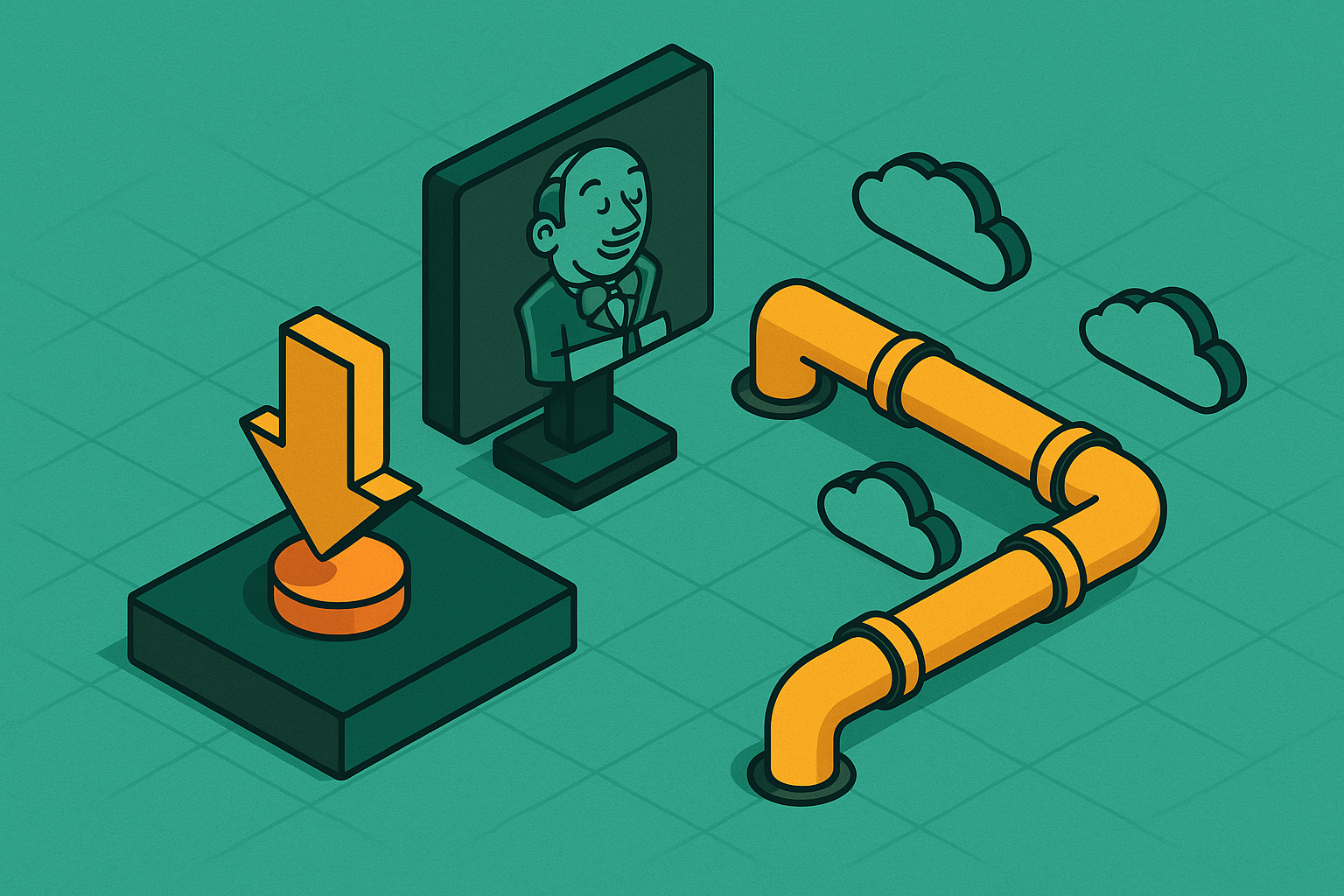
A Jenkins build trigger decides when a pipeline runs. Most teams treat that as the whole decision and stop there, which is the mistake this piece is built around: the trigger also decides which version of the world the pipeline sees, and when the trigger and the environment fall out of sync, nothing throws an error to warn you. "When it fires" is the easy question. "What does it fire into" is the one that actually determines whether the build means anything, and it's the one most pipeline documentation skips.
Environment sensitivity is how exposed a pipeline is to differences in toolchain versions, dependency state, agent setup, and runtime context from one run to the next. It shows up in three places: the agent itself (whatever happens to be installed on the machine or container doing the build), dependency state (the package versions actually resolved at build time, which may not match what got tested last week), and configuration state (the environment variables, credentials, and config files a given run happens to load).
Most drift in that first layer traces back to click-ops. Someone edits a Jenkins job through the UI to chase down a bug, and the change never makes it back into the Jenkinsfile or the Job DSL script that's supposed to define the job. Do that often enough, across enough jobs, and environments quietly stop matching each other. An eight-year-old build agent nobody's fully mapped tends to look like this: multiple JDK versions sitting on PATH with no clear resolution order, plus global package manager state owned by the wrong user. None of those decisions looked wrong on the day someone made them. Stacked up over years, they add up to a machine nobody can reproduce from scratch.
This is where a lot of engineers get the fix backwards. Running rm -rf $WORKSPACE or calling deleteDir() wipes the workspace directory clean, and that's genuinely useful, but it does nothing to fix the toolchain the workspace depends on or the caches that may already be poisoned. Workspace cleanliness and environment cleanliness are not the same property, and treating them as interchangeable is the single most common error in how teams reason about Jenkins reliability. A trigger that fires fast and clean into a dirty agent still gets you a dirty build.
SCM webhook and push triggers, high responsiveness, variable environment exposure
A webhook fires the moment code lands. GitHub, GitLab, or Bitbucket sends a payload to a Jenkins endpoint, and the job starts without waiting on anything. That immediacy is the whole appeal: there's no lag between the commit and the build, so the SCM state the pipeline sees is exactly the state that got pushed. Nothing stale, nothing aged.
The trigger has no opinion about what agent picks up the job, though, and that's where the appeal runs out fast. It fires against whatever's available right then, and if that agent is carrying years of accumulated toolchain drift, the speed that made the webhook attractive is now working against you. A fast trigger into an inconsistent host produces a fast, inconsistent build, and it produces it quickly enough that nobody thinks to question it. Compare that to Poll SCM, which checks the repository on a schedule whether or not anything changed: a webhook only fires on a real event, so it's lighter on resources across the board, but lightness isn't the same thing as safety, and teams that pick webhooks purely for the resource savings are optimizing the wrong variable.
None of that responsiveness means anything unless it's paired with an agent strategy that guarantees a clean starting state: ephemeral containers or microVMs that don't carry yesterday's mess forward. In multibranch setups, a token-matched HTTP call can kick off a scan across branches, handy for repos with many branches, but it needs explicit branch scoping or it will happily trigger builds in environment contexts nobody intended to touch. And webhooks only work if Jenkins is reachable from the outside, which means firewall rules and IP allowlisting that locked-down shops often can't offer.
Poll SCM, the trigger that silently ages its environment between checks
Poll SCM runs on a cron schedule, checking the repo at regular intervals and firing a build only if it finds changes since the last check. The gap that creates is the whole problem. Dependencies resolved during that window may not be the same ones that existed at the moment of the commit, so the build tests a dependency state nobody actually reviewed, because nobody was watching the clock when it changed.
Polling also costs more to run than a webhook does, since Jenkins keeps checking whether anything's different even during long stretches where nothing is. That's the main reason most teams treat webhooks as the default and reach for polling only when they have to, typically when Jenkins sits behind a firewall and can't accept inbound payloads from an external SCM provider. Poll SCM belongs in that fallback slot, not on equal footing with a webhook as a matter of preference. A team choosing it freely, with a webhook available, is usually telling you its dependency management hasn't been thought through.
If polling is the only option, pinning dependencies in a lock file removes most of the danger. Once dependency resolution is deterministic, the gap between commit and build stops mattering, because there's nothing left for that gap to silently change. The real anti-pattern is an hourly poll on a repository with fast-moving dependencies: several updates can stack up between one poll and the next, and the resulting build tests a composite state that no single developer ever looked at, let alone approved.
Scheduled (timer) triggers, predictable timing, least control over what state runs
A timer trigger fires on a cron schedule no matter what changed, or didn't. A nightly regression run at 0 0 * * * is the standard example, and it's a legitimate pattern for heavy builds, compliance scans, or full-suite tests that can't run on every commit.
The tradeoff is that the timer has zero awareness of what's true about the agent or the dependency graph at the moment it fires. If some upstream package updated quietly during the day, the nightly build now tests that new package version with no commit, no review, and no record of anything having changed on the repo side. Of every trigger covered here, this is the one most likely to run an untested dependency state straight into a build log that looks completely routine, precisely because a timer's whole design assumes nothing needs checking beyond the clock.
The damage compounds on a persistent agent. By the time the nightly job kicks off, it's carrying both the day's ambient dependency drift and whatever changes got made to the box itself during working hours. The fix isn't complicated, even if it takes discipline to hold: pin dependencies in a lockfile, and run the timer against an agent that boots fresh for every job. Miss either one and the risk of silent drift climbs. Get both right, alongside version-controlled trigger configuration, and a timer trigger becomes just as safe as any other for an environment-sensitive pipeline. Skip the fresh-agent part and no amount of lockfile discipline will save the nightly run from the box it's sitting on.
Upstream/downstream chaining, environment propagation across stages
Chaining lets a downstream job fire automatically once an upstream job finishes, or succeeds, which is what makes build-test-deploy sequencing possible in the first place. The gate itself is valuable: a deploy stage that only runs after tests pass is a real safeguard against pushing a broken state forward.
What the gate doesn't stop is environment state riding along with the artifact. Whatever binary, config file, or build output the upstream job produces carries the fingerprint of the agent that built it, and that fingerprint travels into the downstream job's execution context whether anyone accounts for it or not. Take an upstream build compiled on an agent running a newer JDK than the downstream deployment agent expects. Tests pass upstream because the upstream environment is internally consistent, and only once the binary lands on a downstream agent with different runtime assumptions do things fail. By then the failure looks like a deployment bug rather than what it actually is, an environment mismatch nobody wrote down.
The fix isn't better testing, it's cutting out the implicit handoff. Push artifacts into a dedicated artifact repository, whether that's a container registry, Artifactory, or a Maven repo, instead of passing them directly between jobs. That turns an implicit handoff into an explicit, versioned one. A simple pattern reinforces this: write BUILD=${BUILD_NUMBER} into a build.properties file as part of the upstream job, then reference it downstream as ${trigger.properties['BUILD']}. That one line creates a traceable link back to the exact build that produced the artifact, which matters enormously when something breaks three stages later and someone needs to know precisely what ran where. Each stage in the chain should declare its own environment outright rather than quietly inheriting whatever the upstream agent happened to be running.
Parameterized build triggers, explicit environment selection with human-error exposure
A parameterized trigger asks a person, or another system, to choose: which environment, which branch, which flag value. Parameters as strings, choices, or booleans get passed in at build time, and this is a core Jenkins capability that doesn't need a plugin unless the goal is to pass those same parameters into a downstream job, at which point the Parameterized Trigger plugin comes into play.
The upside is that the target environment becomes a logged, explicit decision instead of an accident of timing or whatever agent happened to be free. A choice(name: 'ENV', choices: ['dev', 'staging', 'prod']) parameter can drive a pipeline to load config/${params.ENV}.env and inject the right values, changing behavior without touching a single line of pipeline code. Sensitive values, passwords, API keys, tokens, belong in Jenkins Credentials and get exposed through the environment { } block, something like DB_PASSWORD = credentials('db-password-id'). They should never sit hardcoded in a config file or a script, full stop.
The risk here isn't environmental drift, it's plain human error, and that distinction matters because the fix is different too. A developer means to pick staging and picks production instead, and the trigger logs faithfully that a parameter was selected. It has no way of knowing the parameter was wrong. Gating high-risk combinations behind a when { expression { ... } } block that demands explicit confirmation before production stages run closes off a lot of that exposure. Free-text environment names make things worse still, since they let ad-hoc environments accumulate over time, each one potentially carrying config nobody's tracking. Free-text fields are, frankly, a bad default that should be replaced with a fixed choice list wherever the pipeline allows it. Keeping environment-specific configuration in version control, and using infrastructure-as-code tools that Jenkins calls to provision environments the same way every time, turns the parameter into a switch between known, reproducible states rather than a guess dressed up as a dropdown menu.
Remote and API triggers, externally initiated builds and the provenance gap
A remote trigger fires on demand through an API call or a plain URL hit, something like a curl call to the Jenkins job build endpoint with a token parameter. Monitoring systems use this pattern, so do third-party integrations, Jira ticket transitions, Slack commands. A provisioning system telling Jenkins "the new environment is ready, go deploy" is a legitimate and common use of this pattern, carrying context that the SCM has no way of knowing about.
The tradeoff is provenance. The build log shows that a remote call fired the job, but unless the calling system explicitly passes structured parameters along with that call, there's no record of what environment state, what dependency version, or what condition on the other end actually prompted it. A monitoring system that fires a remediation build against a drifted agent may get a failure, or worse, a "successful" build that produces something different from the artifact that worked last time, and the log won't explain why. A bare curl hit with a token is barely more informative than a build that started itself, and it should be treated as a liability to fix, not a convenience to keep.
The fix is to make the caller say what it knows: pass explicit parameters for environment target, version, and reason, so the build record captures the calling system's context rather than just the bare fact that it called. Token-based triggers deserve the same treatment as any other secret, too. They belong in Jenkins Credentials, not hardcoded into a script or checked into a pipeline file where anyone with repo access can read them.
Agent strategy as the variable that determines whether any trigger is safe
Every trigger type above runs into the same wall eventually. The risk always centered on the agent the trigger hands the job to rather than the trigger itself, and treating trigger selection as the primary safety decision is the mistake running through half the incidents described so far. Get the agent strategy wrong and no trigger choice above will save you.
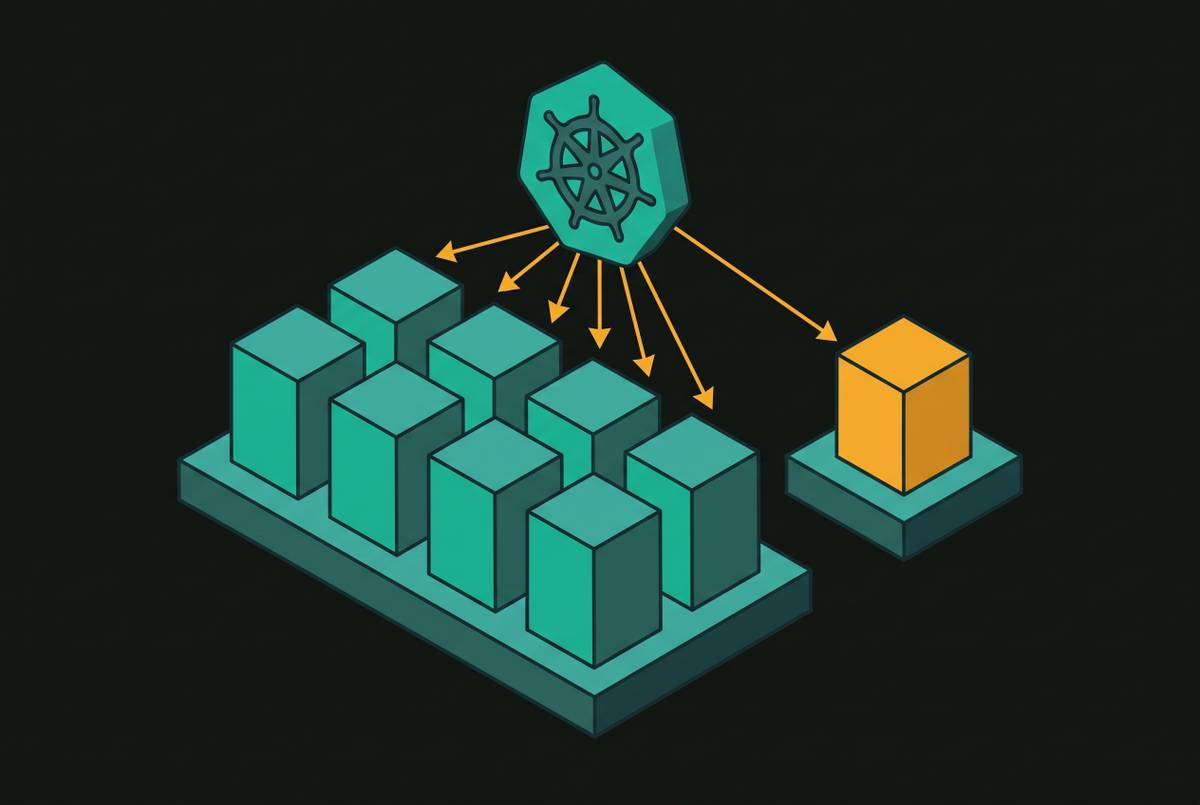
Persistent agents accumulate drift the way any long-lived machine does: toolchain changes nobody documented, caches that quietly go stale, global installs owned by root because someone ran an install command as the wrong user once and never noticed. Workspace cleanup, as already noted, doesn't touch any of that. Docker agents solve a real slice of the problem by running each build inside a declared image, using the Docker Pipeline plugin's docker.image() step, so at least the drift that remains is explicit and version-controlled rather than invisible. Kubernetes pod agents go further, spinning up fresh for the job and disappearing after, though teams at jFrog have reported delays of 1–5 minutes per job when using the Kubernetes executor, and Docker-in-Docker builds sometimes need privileged mode, a known privilege escalation risk worth taking seriously rather than waving off.
Firecracker microVMs sit at the strict end of this spectrum, and they're the right default wherever the workload can tolerate the setup cost. Each build gets its own guest kernel and its own memory, isolated by a hypervisor from every neighboring build, with startup under 125 milliseconds and roughly 5MB of memory overhead per VM. Snapshot restore lands around one to five milliseconds compared to roughly 200 milliseconds for a full boot, a 40x to 200x difference that matters when a fleet of agents needs to cycle constantly. That's a stronger isolation boundary than a plain container offers, without requiring the privileged mode Docker-in-Docker demands. Where containerization is off the table on security grounds, bare-metal or VM agents classified by Java version with OS-level isolation remain a recognized fallback option.
The choice of isolation model matters less than the underlying commitment it represents. Ephemeral agents make every trigger equally safe from an environment-cleanliness standpoint, because there's no accumulated state left to gamble on. Persistent agents, by contrast, make every trigger a bet, whether that trigger is a webhook, a timer, or a remote API call, and no amount of trigger-level tuning changes that math. Tools like Mise (formerly rtx) close part of the gap even before ephemeral infrastructure is fully in place, defining toolchain versions declaratively in a mise.toml file so a local devcontainer session and a remote CI run resolve to the exact same runtime versions, rather than each one quietly trusting whatever happens to be on PATH.
Keeping pipeline configuration itself from drifting
Click-ops shows up again here, because it's the recurring failure mode across everything above, not a separate concern. A developer adjusts a job's build retention policy through the Jenkins UI to chase down a disk space issue, fixes the immediate problem, and never updates the Job DSL script that's supposed to be the source of truth. Months later, dev and test are still running the original retention settings while production behaves differently, and the first sign anyone gets is an unexplained spike in disk usage that takes real time to trace back to a setting nobody remembers changing.
Trigger configuration is exactly as vulnerable to this as retention policy. A trigger tweaked in the UI without a matching update to the Jenkinsfile is a drift event like any other: the system that's actually running no longer matches the system declared in version control, and nothing flags that mismatch on its own. Keep all trigger configuration in Jenkinsfiles, under the same review process as application code, so a change to how or when a pipeline fires goes through a pull request like anything else would. Anything less is just click-ops with better intentions.
Jenkins Configuration as Code (JCasC) extends the same discipline to the controller itself, letting credentials, security realms, and global settings live in YAML that's auditable and can be rolled back rather than existing only as whatever's currently clicked into the UI. The pattern holding all of this together is easy to state, even if it takes real effort to run consistently: observe what configuration is actually required, codify as much of it as possible, block unauthorized changes to that configuration, and monitor for the deviations that slip through anyway. Restricting SCM triggers to specific branches, main and develop rather than every branch in the repo, is a small piece of the same idea: less surface area for an untracked build to start against a state nobody meant to test.